


Social media is decidedly not good for humanity.
In my last essay, I wrote about why the American government should ban TikTok. I largely focused on the substantial evidence that TikTok is a shill for the United States’ greatest geopolitical foe, China. It’s a foundational aspect of TikTok that differentiates it from the likes of Twitter, Facebook, Instagram, Snapchat, LinkedIn et al.
Because TikTok is worse than the others doesn’t mean U.S.-based social media companies aren’t doing harm — they absolutely are. I’ve experienced the brainrot of scrolling mindlessly on social. Most of us have, and we probably don’t need formal studies to tell us that there are downsides of excessive social media use.
But several recent studies have shown that people addicted to short form videos demonstrate “higher levels of depression, anxiety, stress, loneliness, social anxiety, attention problems, and lower life satisfaction and sleep quality.” Kids addicted to short form videos do worse in school, are unable to focus, and are more likely to develop body dissatisfaction.1
This sadly holds true for social media use in general: Facebook leads to sharp increases in depression and anxiety, and social media generally has negative effects on the psychological health of its users. Another study found ties between social media use and worse objective memory performance.2
Rest assured, it will get worse!
Thanks to the introduction of dedicated social media feeds for AI-created content — Facebook has Vibes, OpenAI has Sora, AI images now saturate Pinterest — the internet is descending into AI-generated bullshit. It’s mass-produced engagement and rage bait. It’s slop with no heart, no soul. It does not exist for any purpose beyond consumption — that is where the value begins and ends.
In sum, the kids are idiots now.
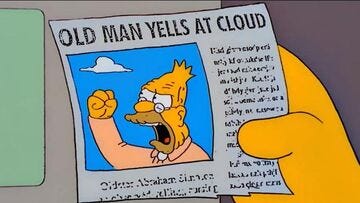
Reading proficiency among fourth graders is at its lowest in two decades, indicative of Gen Alpha’s (people born between 2010 and 2025-ish) growing struggle with words.
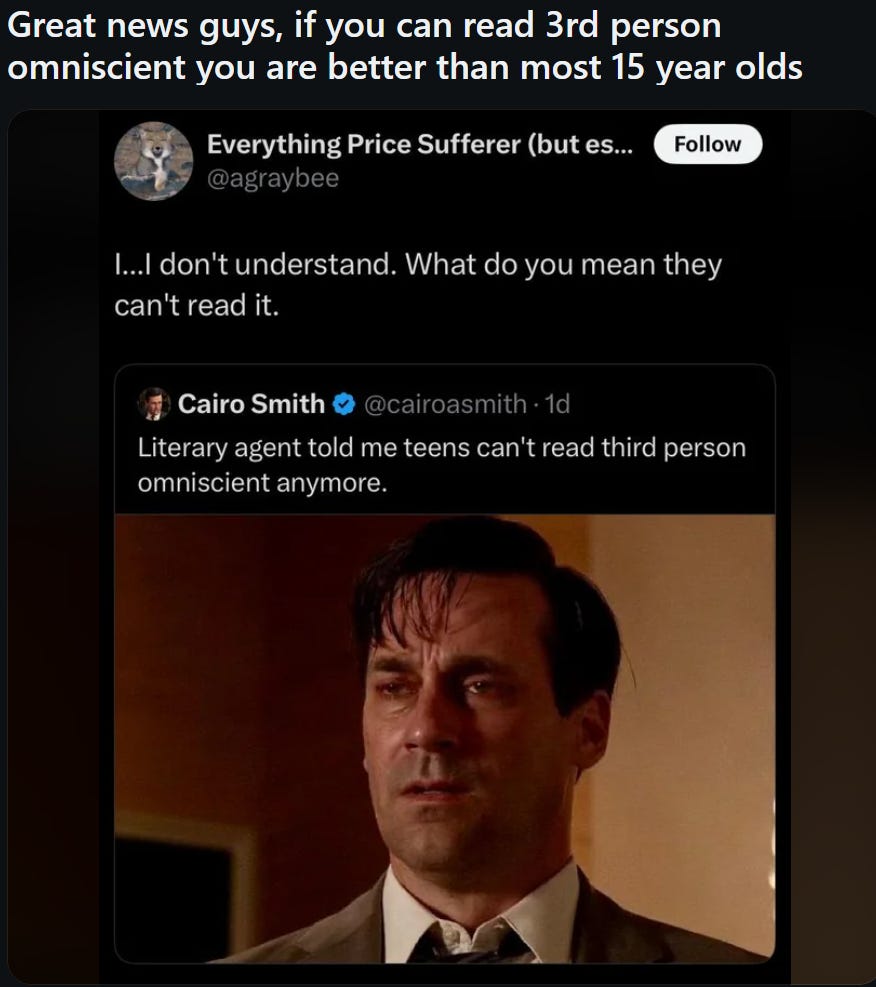
Low literacy rates have a direct link to the social media disease mentioned above — it leads to a decline in attention span because it’s, at best, a few hundred characters worth of words. At worst, it’s a deluge of rapid fire, easily digestible clips. As a result, kids are generally less able or willing to engage with longer, more complex texts. To paraphrase Zoolander, kids suck at “learning to read good.”
This hurts my soul because I love reading. Gaze upon my bookshelf, which, since the time I took that picture 8 months ago, has continued to swell in size. That being said, I don’t think slamming kids with 100,000+ words is the answer if they can’t even get through a single tweet.
So let’s start smaller. Let’s bring long-form journalism back.
What I’m doing with this essay right here, along with many other writers on Substack, is technically long-form writing. But, like Tom Hardy once proclaimed, we mustn’t be afraid to dream a little bit bigger.
Essays won’t cut it — long-form journalism will.
Much to society’s detriment, long-form journalism has been dying a slow death for years, if not decades. There are whole media brands, like Axios, that have made their bread and butter extolling the virtues of writing for ever-shrinking attention spans (Axios dubbed Smart Brevity, after all). Just days ago, they wrote about how US companies “must write shorter” to cut through the noise.3
That we all “must” write shorter is yet another symptom of the social media disease. It’s not just the kids who are unable to have a sustained attention span and consume long-form, complex information. In my favorite essay, Slide decks suck, I extoll the many vices of slide decks, one of which is the false perception that slide decks are short-form content. Even though that’s a gross oversimplification and technically inaccurate, it’s telling that short form content is what C-suite executives crave.
Even though long-form journalism is waning, proclamations of its death are premature. There are journalists writing extensive explorations of the world’s most fascinating and important people and interesting-but-underdiscussed happenings. Explorations of what one of America’s last serious statesmen saw as the GOP fundamentally changed, hidden crime rings you never knew existed, why one of the world’s most accomplished film directors does not fear death, and why Billy Crystal-esque quality knit sweaters are so hard to find are beautiful pieces of writing.
The great thing about long-form journalism is that there’s content that scratches everyone’s itch. I’m a sucker for a deep-dive profile. I love movies and technology design is a topic I find endlessly intellectually stimulating. I believe football (the American brand, aka the only kind that matters) is the best sport on Earth, so the myth surrounding the creation of the Patriots dynasty and Bill Belichick is one of my favorite things I’ve ever read. That Belichick has not shrouded himself in glory as the head football coach of the University of North Carolina and is now getting trolled by college students only enriches the profile. The article lives and breathes. How it reads and the messages it communicates change thanks to current events that have added color and context to my understanding of Belichick and his legacy.
No matter your interest, there are long-form articles that will enrapture you. They burrow into your mind and change and evolve along with your lived experiences and the experiences of the subject of the article. They teach you. They spur intellectual curiosity and evoke new cocktails of emotions. It’s a beautiful thing, really.
So let’s bring long-form journalism back. Read the articles. Subscribe to news outlets still publishing deep, interesting articles — yes, pay them. Advocate with your wallet. Share your favorite piece of long-form journalism on social media (we must use the tools of evil for our own designs) or post it in the comments here.
I’ll start with some of my favorite articles below.
Recommended reading
Profile pieces
In GQ by Zach Baron: Inside Kevin Costner’s $38 Million Horizon Gamble
In Fortune, by Jeremy Kahn: Satya Nadella has made Microsoft 10 times more valuable in his decade as CEO. Can he stay ahead in the AI age?
In ESPN, by Wright Thompson: Caitlin Clark and Iowa find peace in the process
In The Atlantic, by McKay Coppins: What Mitt Romney Saw in the Senate
In Vanity Fair, by Antonio Garcia Martinez: How Mark Zuckerberg Led Facebook’s War to Crush Google Plus
In Pirate Wires, by Mike Solana: The End of Social Media: An Interview With Jack Dorsey
In The Ringer, by Justin Sayles, the aforementioned article on Bill Belichick: The River Finally Came for Bill Belichick
In Variety, by Stephen Rodrick: Michael Mann Fulfills a 30-Year Journey Directing the Operatic, Thrilling ‘Ferrari’ — And Teases ‘Heat 2’: ‘I Don’t Think About Mortality. I’m Busy’
Other interesting articles
In Scientific American by David A. Taylor: Inside the Crime Rings Trafficking Sand
In Fast Company, by Mark Wilson: Netflix’s head of design answers every question you ever had about Netflix
In Pew, by Athena Chapekis, Samuel Bestvater, Emma Remy and Gonzalo Rivero: When Online Content Disappears
In The Atlantic by Amanda Hull: Your Sweaters Are Garbage
Drop your favorites in the comments ⬇️
Shoutout to Emily Ann Hill for providing feedback and editing this essay. Check out Junetail Creative to see how Emily can help improve your writing and, for small businesses, develop an unforgettable brand experience.
If you’re interested in diving into the studies about the impact of short form video about kids:
Similarly, if you want to learn more about how bad social media use is in general:
This was a surprisingly shameless plug for an Axios-authored book. I do not doubt the wisdom here — in business communications, you must write shorter. But something can be true and I can still not like it.
Excellent piece but you can't make a list of profiles without including one by the GOAT: Taffy Brodesser-Akner!
Thanks for writing this, it clarifies a lot. Your analisys of social media's effects is really sharp. I absolutely agree the internet is heading to a strange place. But I wonder, could AI also be engineered to *elevate* long-form content, rather than just generating more noise? It's all about how we design the tools.