


“No, if anyone orders Merlot, I'm leaving. I am NOT drinking any fucking Merlot!”
Paul Giamatti famously slandered Merlot in the 2004 film Sideways, leading to a reported 30% decline in Merlot sales. Nothing about the wine changed. But perception of the wine changed, which impacted revenue. So when Giamatti also lauded Pinot Noir as an alternative, can you guess what happened?
Yep. Pinot Noir sales surged.
For modern companies, The Sideways Conundrum is the norm: How a company, brand, and/or founder is perceived is their reality (reality being revenue, stock price, and/or the ability for a company to sell its products or services).
But the Merlots of the world are not stuck forever. Meta and Anduril are two controversial brands with controversial founders — who were, once upon a time, Merlots — that have done deceptively simple things to alter their organizations’ perceptions, resulting in business growth ($$$). They’re proof that like the tastes of oenophiles, brands and founders can go from Merlot to Pinot.
Radical authenticity is a market winner
In October 2021, weeks before Facebook rebranded to Meta, a whistleblower testified in the Senate claiming that Facebook’s products “harm kids and democracy.”
As far as critiques of a brand go, “damaging democracy” is pretty rough. Then, the rebrand to Meta was widely mocked by pundits and many in the tech ecosystem: “The metaverse that the new name refers to is not well-known or understood, so it’s confusing.” “Meta is a stupid company name.”
Fast forward to August 2022, and Zuckerberg was roasted for this (admittedly terrible) metaversian image.
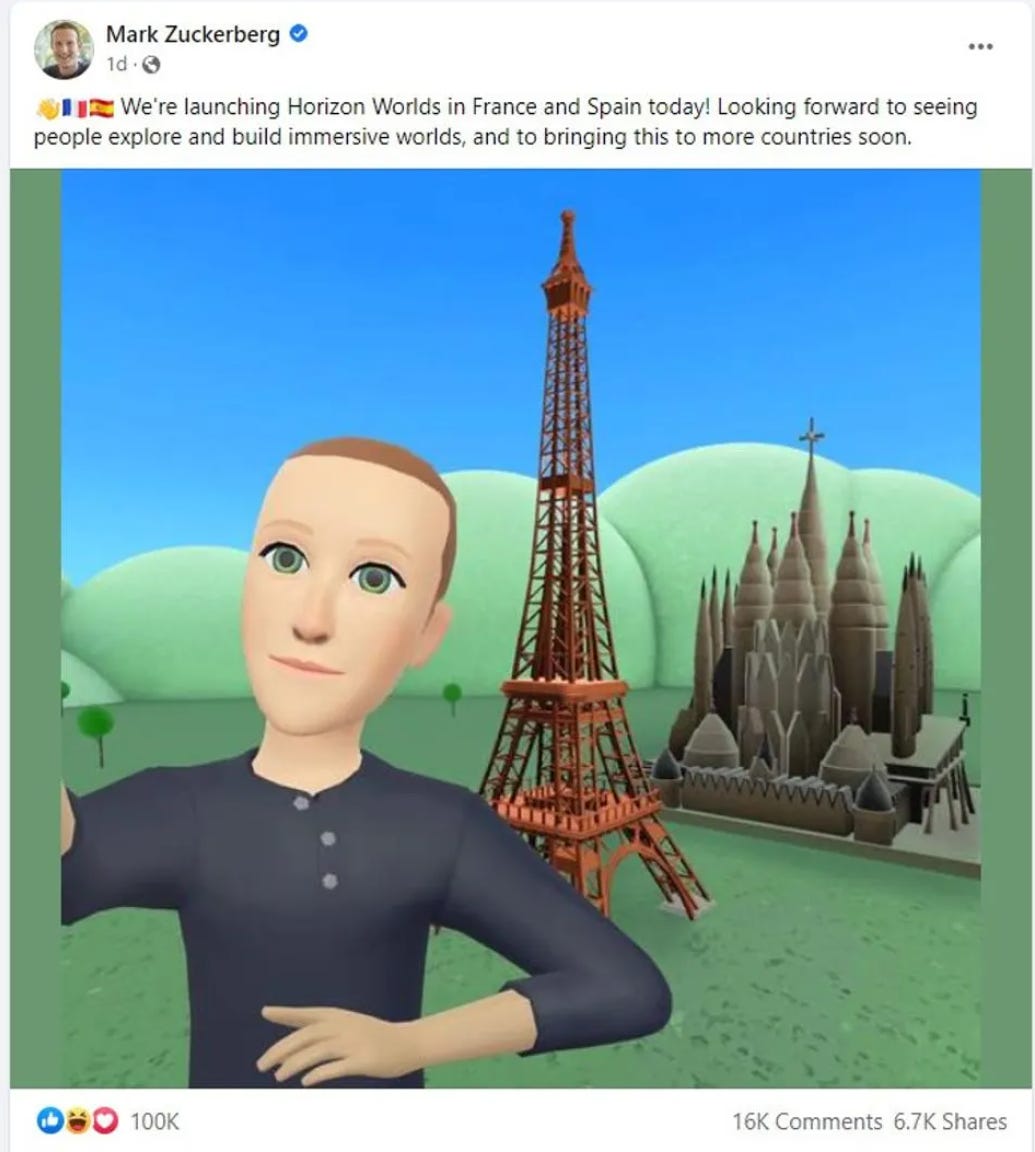
By October 2022, Meta lost more than $700 billion of its $1 trillion market value, a 73% decline.
Fast forward to today, and Meta is riding high. With a $1.5T in market cap, it's the 7th largest company on Earth. WhatsApp (a Meta company) is the most popular messaging app in the world. Facebook and Instagram (both Meta companies) have 5x the number of users compared to TikTok.
And Mark Zuckerberg is cool now. People thirsted over Bearded Zuckerberg. He’s rocking Carthago delenda est shirts and gold chains; he’s surfing in a tux; he’s sharing a “review” of Apple’s Vision Pro headset? I know, I know, one of these doesn’t seem like the other, but they fit together better than you might think.
Much has rightly been made of Zuckerberg’s personal rebrand as an example of how founder authenticity can help rebuild brand perception. And rebuild it did. But Meta’s rebound came with not only personal authenticity from the founder, but authenticity within a business context.
Let’s return to Zuckerberg’s review of Apple’s Vision Pro headset, which notably happened in February 2024, before his celebrated personal rebrand. Yes, Meta sells a competing product. Yes, Meta has beef with Apple thanks to Apple’s “privacy measures” that hurt Meta’s ad business.
But this video was authentic (spend a few minutes watching it after you’re done reading).
Gone was the awkward, stodgy Zuck. No more “Senator, we sell ads.” Instead, Zuckerberg was himself. Directly addressing a competitor’s product is usually fertile ground for inauthenticity (i.e., marketing bullshit), but I like Zuckerberg’s review of Apple’s headset. He had measured critiques of a competing product’s downsides relative to his own. He gave Apple credit where credit was due. In short, his commentary felt real.
Communications teams can often over-index on polish. We want our spokespeople to be “on brand” and media trained, but in turn, we lose authenticity. I’m not suggesting you put a gold chain on your founder (please do not do this. It will not work). I am suggesting you lean in to your founder’s strengths and find the right avenues for them to communicate that align with their style.
In Meta’s case, Zuckerberg’s comparison of Meta’s AR/VR headset to Apple’s is as authentic as his Gen-Z style. He blends technical-leaning language with real-world uses of both products and pairs that with his vision for the future, while proving his bet on mixed reality is working.
For a communications team, all of that checks a lot of boxes.
For Zuckerberg, a direct video on Instagram gelled with his style — he could speak loosely, without fear of being overly scripted (see: his Congressional testimony, where he came off like a robot).
For Meta, authenticity from its founder, both personally and professionally, led to resurgence — from a killer of democracy to, once again, a tech powerhouse.
Find (and repeat) a key message that lasts years
It wasn’t long ago that Silicon Valley was uncomfortable working with the military. Google employees protested a partnership with the Pentagon. Amazon employees protested the organization’s relationship with US Immigration and Customs Enforcement (ICE). Microsoft employees protested a contract with the Army.
So when Palmer Luckey, founder of Oculus (a virtual reality headset) who was famously ousted from Meta for donating “$10,000 to an anti-Hillary Clinton group,” started a defense technology company called Anduril in 2017, he — and his company — were outliers in Silicon Valley. To make matters more complicated, Anduril’s first mission was to build a virtual border wall. I don’t know if you remember what conversations about the border were like in 2017, but politically charged doesn’t even begin to cover it.
So, critiques rolled in. And they kept coming.
CNN has described Luckey as “a homeschooled teenager who ate mostly frozen burritos.” The Intercept noted “Luckey is presenting a company that is unapologetic about its work capturing immigrants or killing people on the battlefield.” The Guardian views Luckey’s “embrace of the dark side of Trump’s internet army” as “so alarming.” Merits of the commentary aside, the fundamental truth is that Luckey and Anduril were viewed negatively by many for years.
Doggedly, Luckey and Anduril changed hearts and minds by consistently communicating a vision for the future and executing against that vision.
In June 2017, here’s what Luckey emailed the Times about his company: “We need a new kind of defense company, one that will save taxpayer dollars while creating superior technology to keep our troops and citizens safer.”
In 2022, Anduril’s mission document stated: “We need a new breed of defense technology companies to reboot the arsenal of democracy.”
And in 2024: “Anduril is investing our own dollars to hyperscale weapons manufacturing using the same agile, rapid, and scalable processes found in the commercial manufacturing sector.”
These are variants on the same key message: The legacy companies building the weapons and technologies to protect America’s interests and keep people safe were failing. Anduril would build modern weapons and technologies America and its allies need for 21st century national security.
And build they did.
Anduril expanded from virtual border walls to a suite of autonomous aircraft, an autonomous underwater vehicle, and rocket motors for defense and space systems. Their products and their message created a virtuous loop, reinforcing one another: “The U.S. and its allies need better ways of manufacturing advanced weaponry and technologies to protect America’s national interests. We’ll give it to them.”
As the world got more dangerous — as of June 2024, there were “currently 56 conflicts, the most since World War II” — Anduril’s message grew increasingly resonant. Perhaps it was luck(ey), or perhaps Luckey saw which way the geopolitical winds were blowing 7 years ago. Regardless, Anduril would not have been credibly positioned to win contracts that historically went to defense primes like Lockheed Martin and Northrop Grumman without both ruthlessly communicating a consistent message and executing against that message.
Observers changed their tune.
“Major investors believe Anduril has cracked the government contract code,” reports Axios. The Wall Street Journal glowingly wrote about Luckey as a “tech bro that can help win a war with China.” Luckey rode around with Bloomberg’s Emily Chang in his “personal warship.” If nothing else, it’s a far cry from frozen burritos and memes.
Anduril winning the brand perception war has not only changed the direction of the company, but of the defense tech industry as a whole. In 2019, defense tech companies raised $1.7 billion. From 2021 through mid-June 2024, the WSJ reports “venture capitalists invested a total of $130 billion in defense-tech startups,” which nets out to about $37 billion a year on average.
For those counting at home, that’s about a 2076% increase in investments.
For communications pros working with founders, the idea is simple: Have conviction in your message and stick to it. Hammer it home at every available opportunity. Beat the drum over and over and over. Beat the drum more.
Without consistency, the market and key constituencies won’t understand who you are and what you stand for. And you cannot change opinions without first cultivating understanding.
From Merlot to Pinot
For companies and founders, changing brand perception isn’t as quick or linear as a Paul Giamatti rant about wine.
It takes time.
It requires authenticity.
And it demands consistency.
Authenticity, consistency — while these concepts aren’t complicated, applying them in practice is exceedingly hard. But anything worth anything usually is. 🍷
i had a conversation with an old bloke recently, he talked to me about oil prices so I asked if he followed stocks to which he said it’s all full of garbage. all smoke and mirrors. load of bullshit. the only thing that retains value are assets and hard work.
while I don’t fully agree with the guy, I can 100% sympathise with it - the same way the stock market does not (or at least, no longer) represents the overall economy, a given stock only partially shows the “assets” or “hard work” or “value” or said company. a ton of it is mass hallucination and speculation, from mom and pop investors and investment funds and angel investors hoping for the next 1000x. financial markets are befuddled by the opinions of those who have the money to show it, and if not that, the weighted consciousness of a ton of people thinking the same thing.
and it’s a bit like that here too with the surge of personal branding of ceos and founders across social media. a concept that was previously called, you know, reputation. i wouldn’t say i’m a zuck lover and still think he eats bricks but compared to his image a few years ago, MASSIVE change, and kudos to the meta PR team really for turning that around as long as we understand that these seemingly authentic actions done by mark have gone through rounds and rounds of compliance review. nonchalance is engineered, the whimsy is calculated, and the candid photographs are preceded with “im going to rock my feet back and forth please take a candid shot of me”
thanks for sharing ian - just thinking out loud here of how important it is than ever for b2c brands to be a bit more human (and how in many ways that can still fall flat, but it’s better probably than to do nothing at all)