


Much proverbial ink1 has already been spilled about Anthropic’s Super Bowl advertisements2 panning OpenAI’s decision to put ads in ChatGPT. To wit:
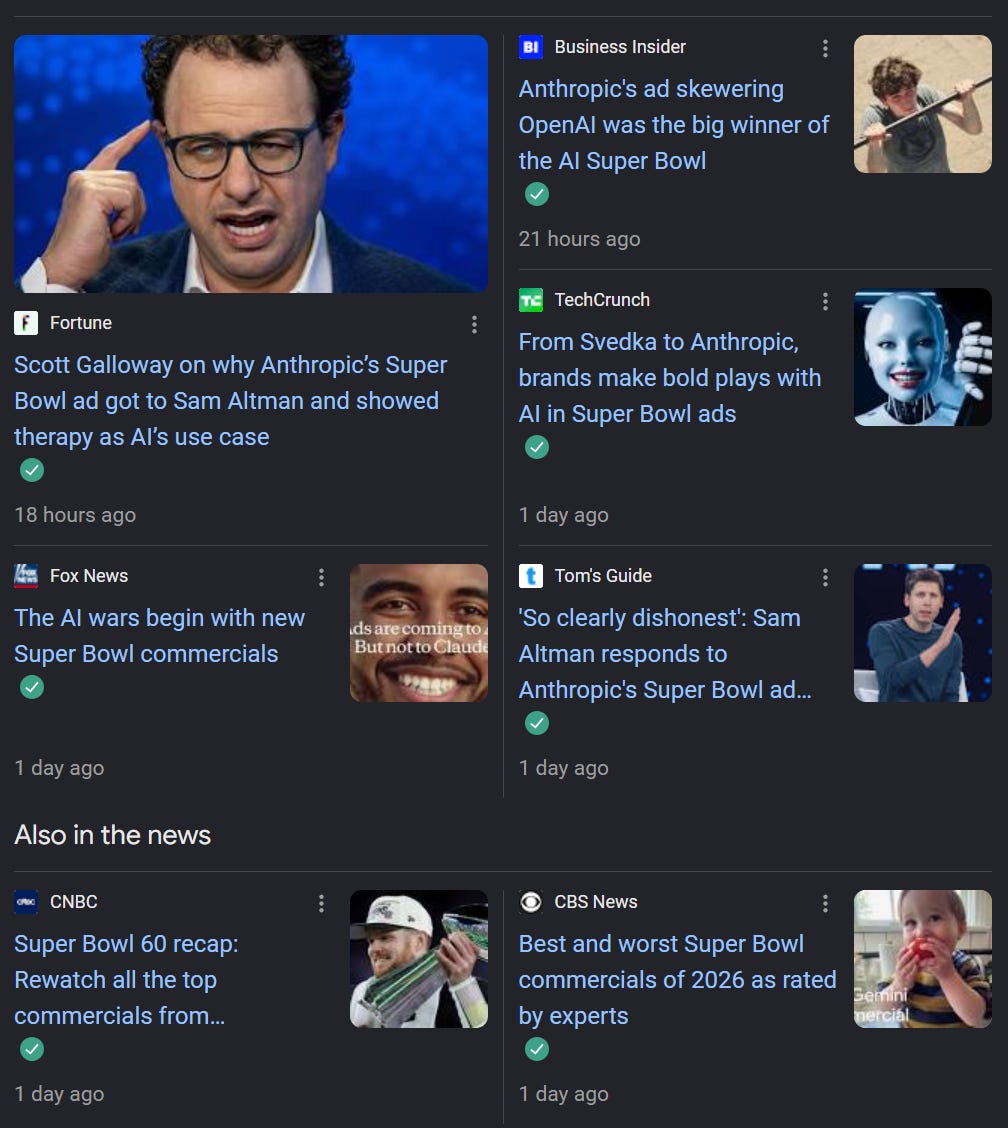
I do not need to regurgitate these arguments, nor the many takes across Twitter and Substack about the meritoriousness of Anthropic’s ads.
Instead, I want to focus on two mistakes OpenAI made that put them in this position in the first place — with advice on how to avoid them.
Error one: Loose lips sink ships
When you are an enterprise of OpenAI’s scale and prominence, you should expect everything to get leaked — everything. And that’s what happened.
On November 29, 2025, plans for ChatGPT’s ads first leaked thanks to intrepid Android observers who found evidence of UI strings for sponsored content.
On December 30, 2025, Redditors shared leaked mockups of ads in ChatGPT
On January 16, OpenAI confirmed it would begin testing ads for certain ChatGPT users.
For those counting at home, that’s 48 days between the leak and anything official from OpenAI.
That’s 48 days that OpenAI ceded the narrative to… everyone else. That includes competitors, like Anthropic.
As a communicator, it’s better to be on the front foot, playing offensive. Making a proactive argument about why something is good is easier than defending a decision from criticism. OpenAI put themselves on defense by being unable or not ready to engage publicly when the leak happened. As a communicator, you have to be ready for leaks before they happen. Sometimes that means saying nothing. But in a case like this, with ads — which are decidedly a hot button issue — it is mission-critical to have a plan baked and statements ready.
Error two: Defensive defense
OpenAI probably acknowledges the reality: People hate ads.3 Yes, ads allow things to be free, like ChatGPT, which democratizes access to those things. They are a billion studies you can look up to show you, intellectually, why ads are good, and the internet is replete with people pontificating about the value of ads.4
But emotionally? People don’t like ‘em.
If, like ChatGPT, you’ve spent a month and a half functionally silent after your plan to introduce a thing people don’t like into your product has leaked, the stakes are raised. When you finally do say something, the tone of what is said becomes as important as the content.
The tone becomes doubly important if, like ChatGPT, your CEO and CMO choose to communicate about ads not in the aggregate, but in response to a competitor’s ads dinging your choice. Now, let’s look at said CEO and CMO’s responses (warning, these tweets are long as hell).
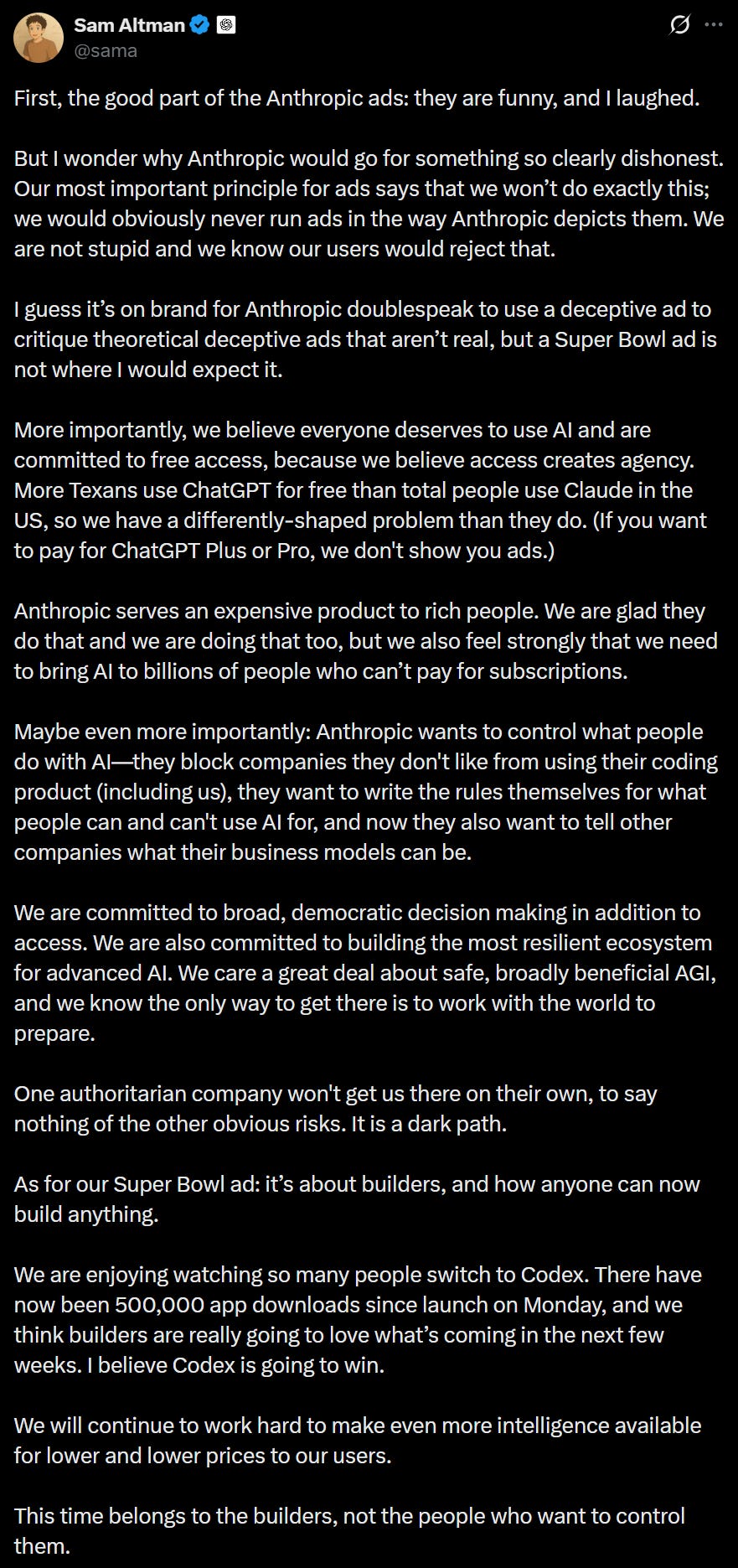
First, OpenAI CEO Sam Altman:
Now, OpenAI CMO Kate Rouch:
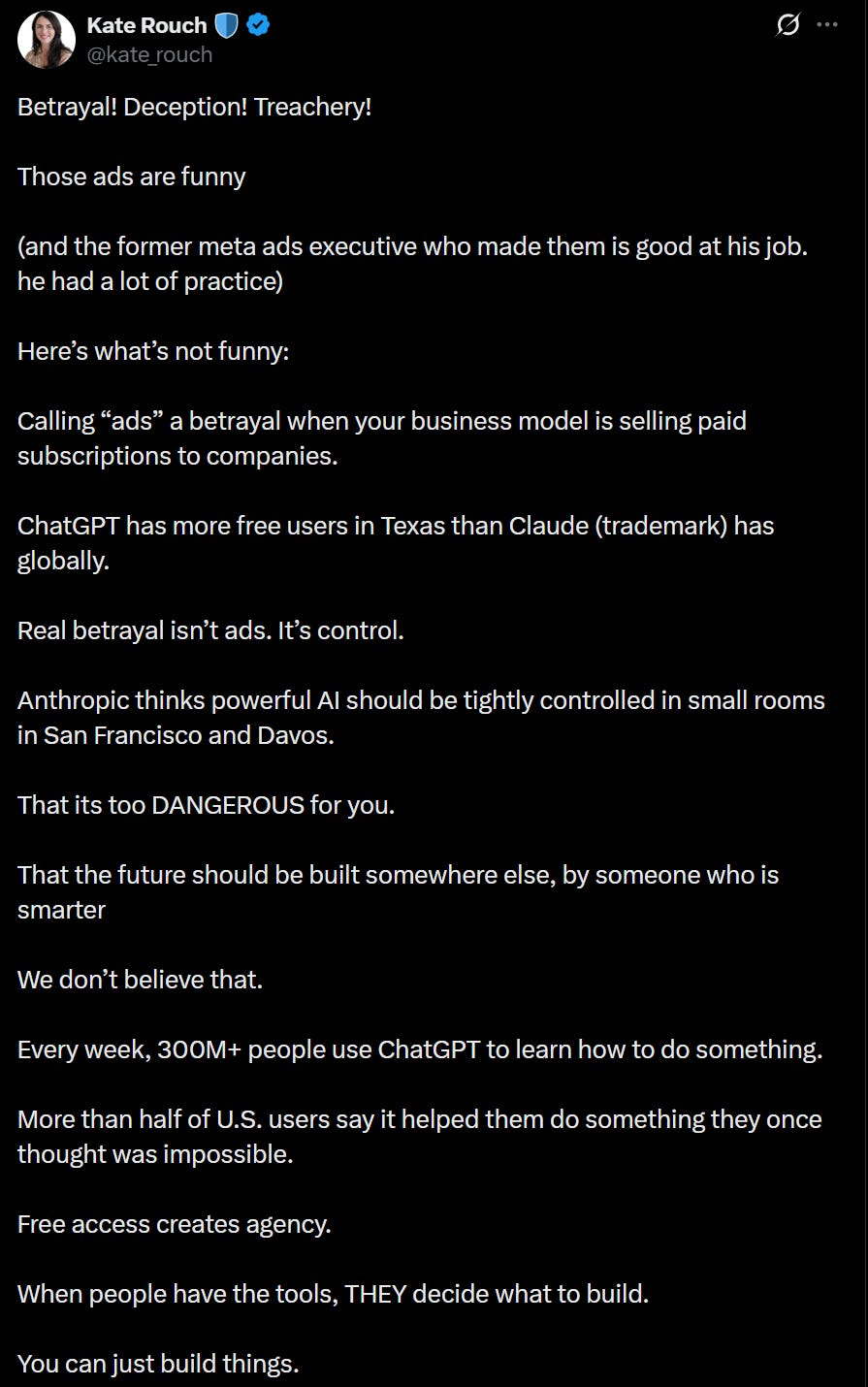
They start their statements by directly addressing Anthropic’s ads.
From Atlman: “I wonder why Anthropic would go for something so clearly dishonest. . . I guess it’s on brand for Anthropic doublespeak to use a deceptive ad. . .”
From Rouch: “Here’s what’s not funny: Calling “ads” a betrayal when your business model is selling paid subscriptions to companies. . . . Real betrayal isn’t ads. It’s control.”
These statements are so defensive — dare I say whiny. It reminds me of a famous tweet from Internet Poet Laureate Dril:
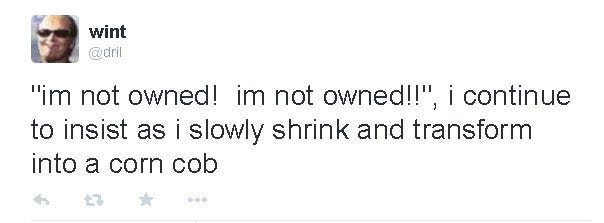
The truth is, the ads are funny. Based, even. OpenAI got cooked by Anthropic. It is what it is.
Instead of fighting back on Anthropic’s terms, OpenAI could have made a defensive comms moment positive by emphasizing solely the benefits ads provide. Focus on the good outcomes, not the mechanism that provides those outcomes. People don’t care how the sausage is made (ads), they just want tasty sausage (free stuff!).
Instead, they started their statements by complaining about the opposition. But no one cares! “It’s not fair” is not a winning argument.
In nearly every debate, there is a way to frame the same idea defensively or positively. Even when a company is being critiqued — rightly or wrongly — even when a company is playing defense, that does not automatically necessitate a defensive response.
Sometimes it does. Sometimes you should punch back. Sometimes directly tearing down an opponent is what’s called for. And sometimes, silence is the best answer.
In OpenAI’s case, they chose to be defensive about ads — something about which more than half of all Americans say: “they’re uncomfortable with companies using online behavior to personalize advertising.” Is that the hill to die on? Vociferously defending a thing that half of Americans hate?
Hint, dear reader: I think not.
It is not easy to be a happy warrior, to put on a smile in the face of attacks. But it very often represents the best path forward.
The ads are funny: Can I get a six pack quickly?, What do you think of my business idea?, and Is my essay making a clear argument? are a few.