


Timothée Chalamet has been on a legendary press run in the lead-up to and after the release of his newest film, Marty Supreme, continuing his habit of leveraging off-the-beaten-path channels and messages to promote his films to his great benefit.
For Marty Supreme, he appeared on professional wrestler Cody Rhodes’ podcast, demonstrating an unbelievably deep knowledge about WWE history. Chalamet joined former NBA player Carmelo Anthony’s podcast where he showed off his New York Knicks acumen, and Anthony Edwards, current NBA superstar, proclaimed Chalamet “the white boy of the year.” During a panel to promote the Marty Supreme in Brazil, he danced to “Crank That Soulja Boy.”
There were rumors he was famed British rapper EsDeeKid, only to then appear in an EsDeeKid video and rap a verse about Marty Supreme — an incredible marketing stunt. Hell, he was the first person to stand on top of the Las Vegas Sphere.
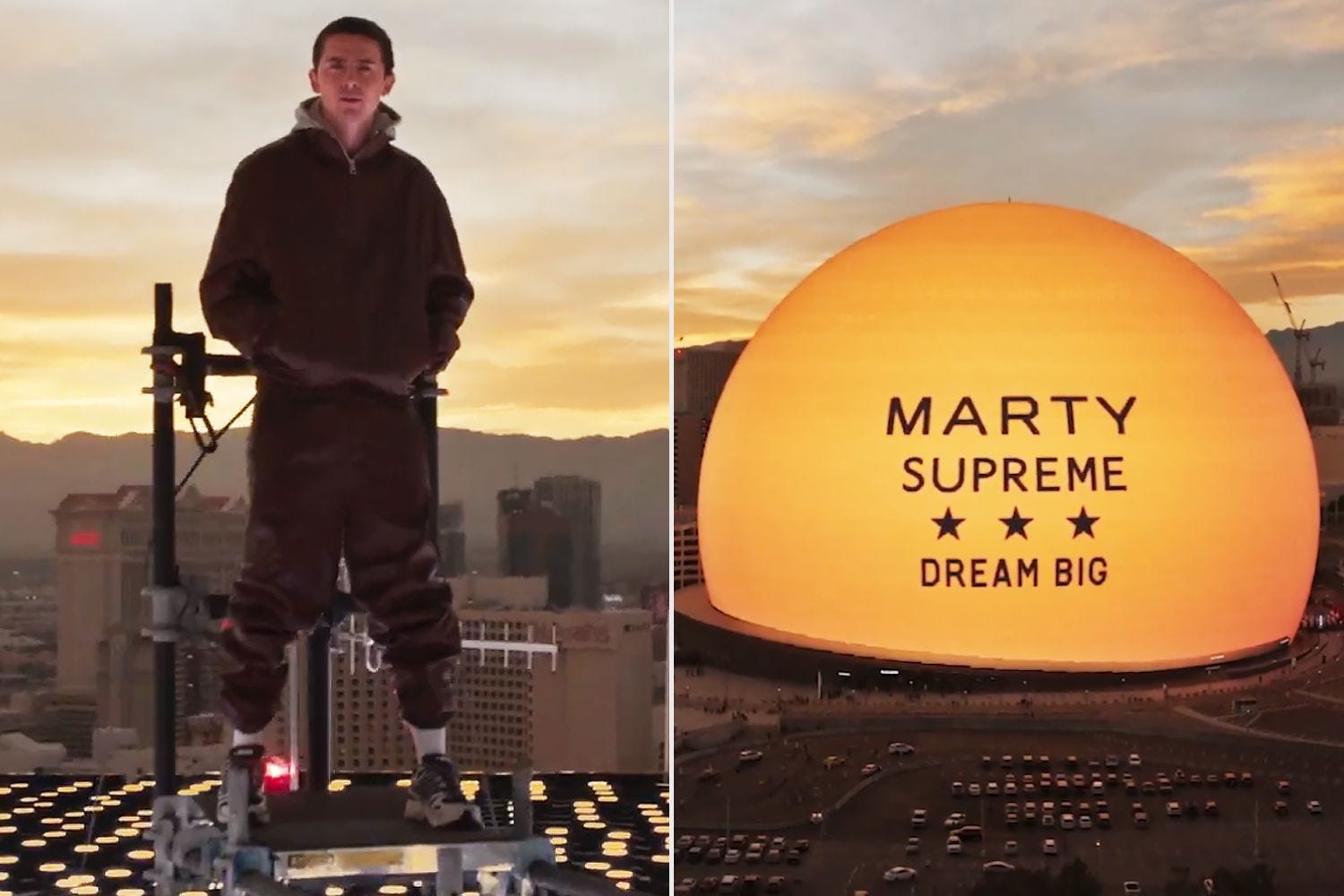
This isn’t new for him. A year ago, in advance of musical biopic A Complete Unknown, where he portrays the titular Bob Dylan, Chalamet appeared on ESPN’s College Gameday and proved himself to the world as a true ball knower.
What’s the overlap between Bob Dylan and College football? Or, for that matter, what do a British rapper, the WWE, and various NBA stars have to do with a movie about a professional table tennis player in 1950s New York City?
On its face, not much at all. But Chalamet (and presumably, his team) have figured out something few other celebrities or founders have: Pure authenticity.
The two ingredients to authenticity
Friend and professional colleague Cameron Langford astutely explains one of Chalamet’s best tricks: Focusing on the channel that best suits him. He’s an actor — that he radiates charisma in front of the camera should surprise no one, which is why he consistently favors video-centric promotional mediums. Chalamet, of course, marries his preferred medium with his preferred topics (the man loves sports).

Whenever I begin working with a startup, I always have Cameron’s advice in mind, and I always want to know, very simply: What do they like to talk about? With these two ingredients — topic(s) that make founders excited paired with mediums through which they excel — I’m confident I can craft a comms strategy that both supports the business (like Chalamet’s strategy aligns with promoting his movies) and gives founders their best chance to show the world what makes them unique.
Authenticity is not a new idea, and the path outlined above may seem simple. However, I often see founders make one of two mistakes that make executing the idea above next to impossible.
One: They see someone else’s version of authenticity and want to emulate that. One prime example founders look towards is Palantir founder Alex Karp and his brand of twitchy “truth telling” in the face of power. In the lead up to Palantir’s admission to the S&P 500 enrapture, he posted a super weird six minute video of him walking through the woods. Of course, it is obvious upon even the slightest interrogation that mimicry of someone else’s version of authenticity is, in fact, not authentic at all.
Two: They only want to talk about their company and what they’re doing and what they’re building. Navel gaze, navel gaze, navel gaze. Watch Chalamet’s interviews! Obviously he mentions the film he’s promoting when it comes up, but Marty Supreme is not the fulcrum of even the majority of the interviews he’s doing. He’s talking about stuff he likes — it’s naturally energizing for the audience because they can feel true, infectious excitement, and they want to engage with him. For Chalamet, that’s seeing his movie.
Keller Cliffton, founder of Zipline, used to be a professional rock climber and excels on video. Last month, he did a video-first podcast in a bouldering gym during which he talked about and showed off his climbing abilities. Watch the video yourself — can you feel the authentic energy radiating off of Keller when he talks about climbing? Yes, the interview hits on his company (autonomous logistics via drone), but the central conceit — a rock climbing interview — works to help promote Zipline all the same. It’s the Chalamet model in action.
Another example is brought to you by Antony Brydon. Currently co-founder and CEO of BrightLoop, Antony used to be the CEO/founder of Directly, a “gig + AI software platform for customer service.” He’s a deep thinker and strong writer, so the written word is Brydon’s medium of choice. And the topic he is passionate about? Maintaining a resilient capitalistic economy during the rise of AI (which, given he was thinking about this back 2019, feels prescient). So he married his topic of interest and medium of strength, and wrote an opinion article in VentureBeat about just that.
Far be it for me to tell a founder what they’re excited about — whether it be economic systems or NBA basketball or rock climbing or real time strategy game StarCraft II, of which Shopify CEO Tobias Lutke is a fan (yet another example of a founder using their interests to help promote their organization). Whatever they are, we all have our interests, we all like weird, niche stuff.
It is, however, incumbent upon communications professionals to find out what makes founders pumped, what invigorates them intellectually, what gets them out of bed in the morning. Harnessing earnest, genuine interest through a medium in which a founder is already most effective is the best way to show the world who these people are and get their message across — authentically.
Shoutout to Emily Ann Hill for providing feedback and editing this essay. Check out Junetail Creative to see how Emily can help improve your writing and, for small businesses, develop an unforgettable brand experience.